
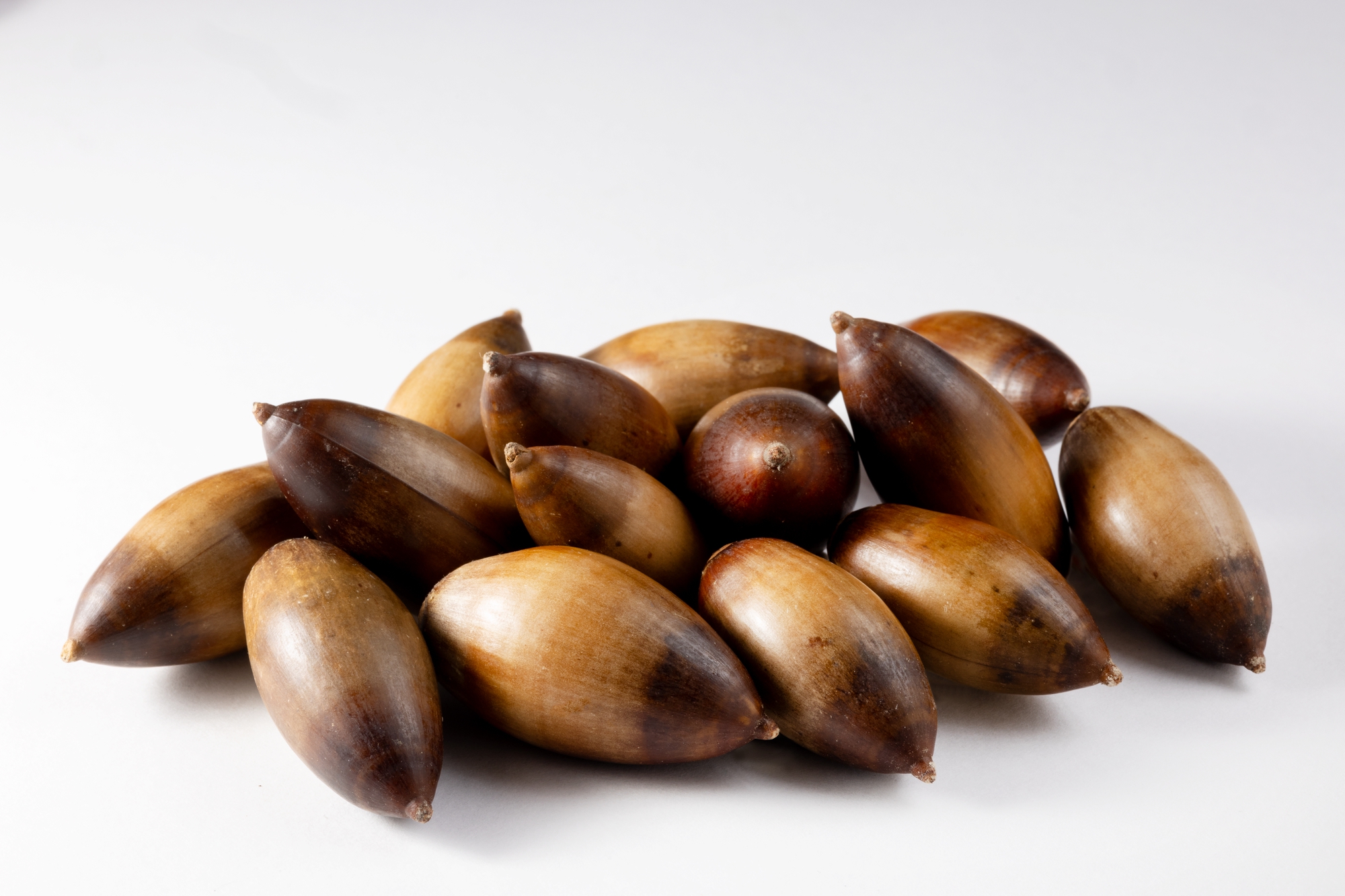
THE ACORN
The fertility of the forest.
For thousands of years, the acorn was a central pillar in the diet of many cultures, nourishing generations around the world before cereals took its place. Today, nearly forgotten, this wild fruit is re-emerging as a key ingredient for the future.
Reintroducing acorns into our diet can help us build a healthier and more sustainable way of eating. Nutritionally, acorns are rich in unsaturated fats (similar to olive oil and avocado), antioxidants, B vitamins, and minerals such as potassium and magnesium. They are gluten-free and have a low glycemic index.
But beyond individual benefits, the acorn invites us to embrace a broader collective shift. It reconnects us with the forest and encourages us to reconcile agriculture with natural processes, weakening the artificial divide we have created between the human and the wild. At Quercània, we believe people can play an active role in the forest and, far from degrading it, have a regenerative impact on it.

WILD ORIGIN
No pesticides, fertilizers, or irrigation. Only living soil and natural processes.

AUTHENTIC AND DISTINCTIVE FLAVOR
It has a mildly sweet flavor with roasted nutty notes. It adds character to any recipe, both sweet and savory.

NUTRITIONAL DENSITY
Gluten-free, high in fiber, healthy fats, and antioxidants. A source of micronutrients such as potassium, magnesium, and vitamin E.
THE ORIGIN THAT NOURISHED US
Acorns are an abundant, nutritious, and easy-to-store resource. For this reason, wherever oaks grow, people have gathered, processed, and eaten them. In our region, their consumption has been a historical constant: from prehistory, through Iberian and Celtic cultures, all the way to the Middle Ages.
And not only that — in many cases, they played a central role in the diet. They were a staple food, the main source of carbohydrates; bread was made from acorns.
With the rise first of cereal agriculture and later industrial farming, their consumption gradually declined until it nearly disappeared.
Even today, in many rural areas, memories of eating acorns still remain — often associated with difficult times, but also with a period when we were deeply connected to nature.
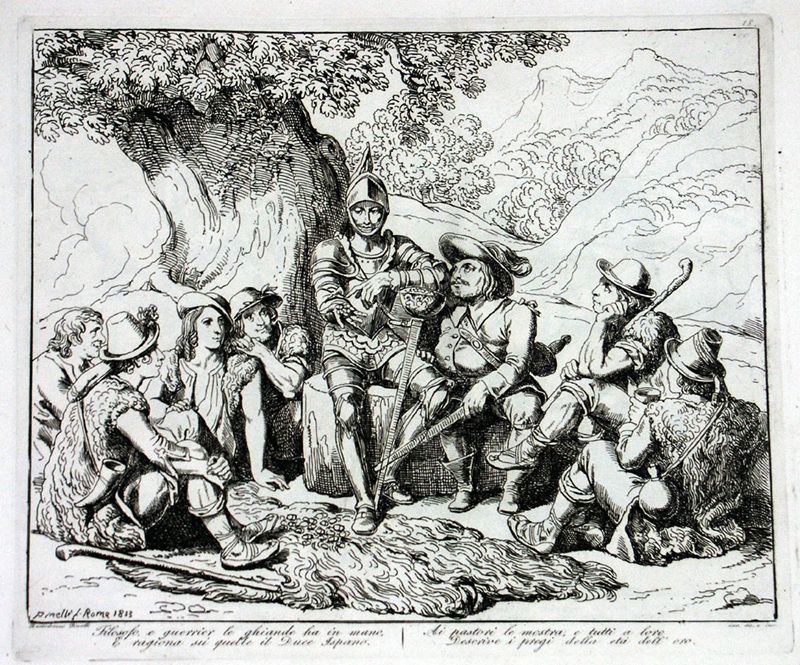
Illustration of a passage from Don Quixote in which shepherds offer him acorns to eat.
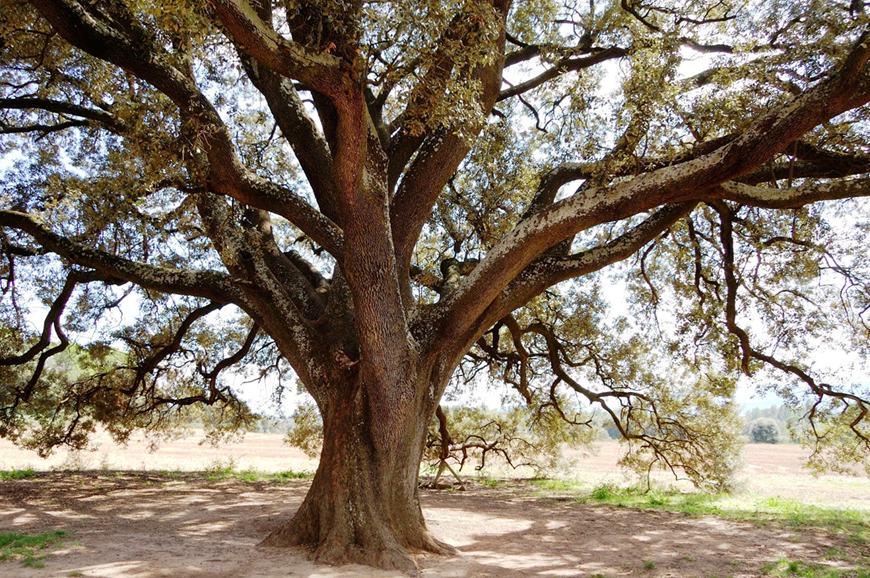
THE HOLM OAK
ROBUST AND GENEROUS
It is the most widespread tree in the Iberian Peninsula. Able to withstand droughts and extreme temperatures, it can also grow in poor soils and endure strong winds. The holm oak forest represents the final stage of ecological succession in most of the Mediterranean region: a mature forest and habitat for a great diversity of plants and animals, including humans.
Among the 400 to 600 species of acorn-producing trees and shrubs found around the world, the holm oak provides some of the sweetest acorns and is likely one of the most productive species as well. This is the result of the long and close relationship between holm oaks and people — a coexistence that allows us today to speak of a semi-domesticated tree, or one still in the process of domestication.
To once again see the holm oak forest as a source of food is to recognize that ecological climax can also represent the climax of our food sovereignty.
THE LANDSCAPE ON THE PLATE
Acorns grow in diverse ecosystems, free from chemicals and rooted in living soil: structured by fungi, bacteria, deep roots, and rich organic matter. It is precisely this origin that gives them such high nutritional density and a complex flavor full of nuances.
Unlike chestnut or carob flour — which have more intense and direct flavors — acorns offer a gentle sweetness with roasted nutty notes, balanced and not overpowering.
That is why they are ideal as a staple ingredient: breads, pasta, doughs, and other preparations where we do not want a strong flavor to dominate everything. A quality that makes acorns perfect for combining with other ingredients without masking them.
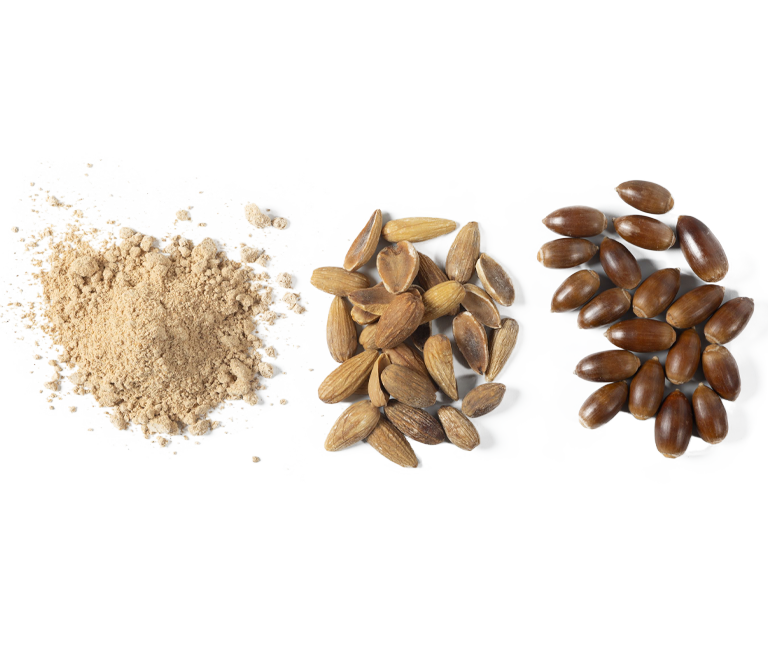
WANT TO DISCOVER THE FULL POTENTIAL OF ACORNS?
Subscribe to our newsletter and be the first to receive updates, applications, and inspiration for incorporating this wild ingredient into your products.


